





Reviewed by Russell Noga, Licensed Medicare Insurance Broker (all 50 states) — Last updated November 7, 2026
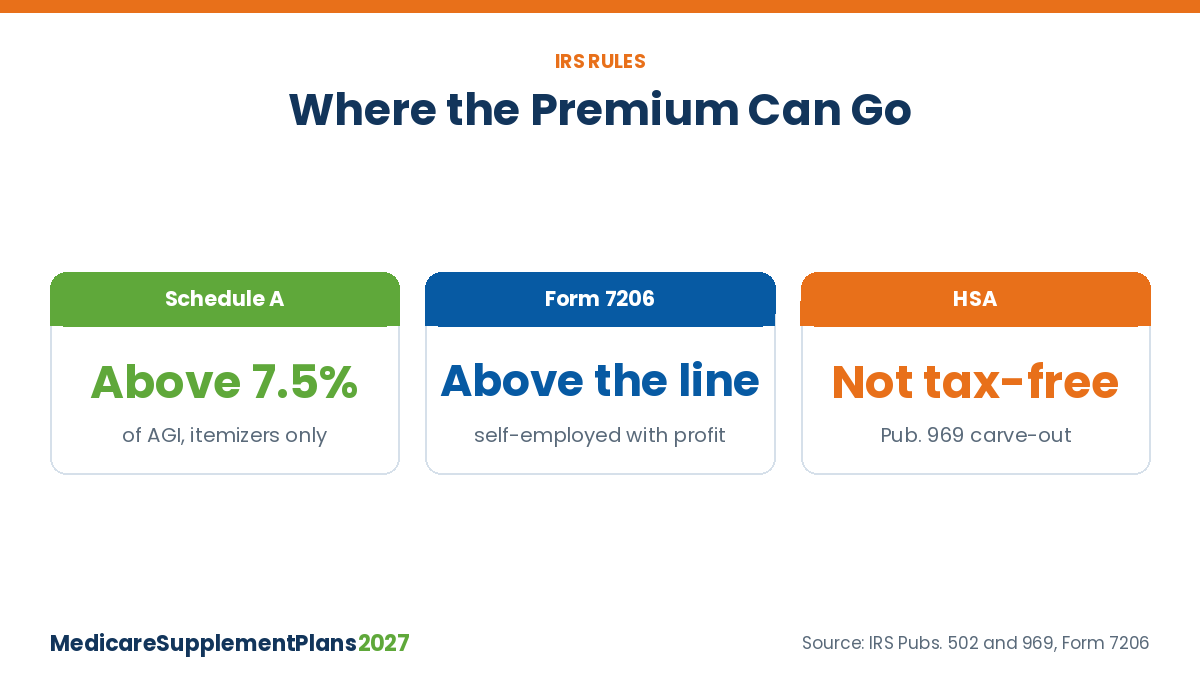
Yes, Medicare Supplement premiums are tax deductible as a medical expense, but only if you itemize on Schedule A and only for the part of your total medical costs above 7.5% of your adjusted gross income. Self-employed people who meet the IRS rules can instead deduct them above the line on Form 7206, with no 7.5% floor and no need to itemize.
2027 by the Numbers
7.5%
of AGI that medical costs must pass before any of it counts (IRS Publication 502)
$18,150
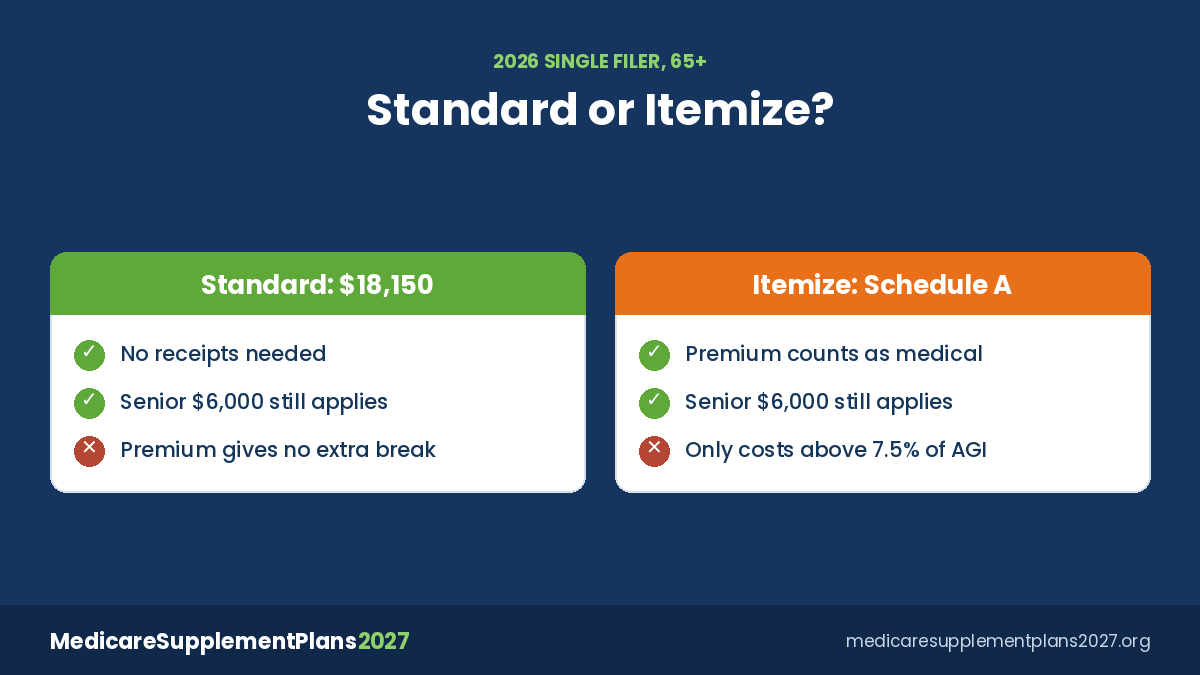
2026 standard deduction for a single filer 65 or older (IRS Rev. Proc. 2025-32)
$6,000
extra deduction per person 65+ for tax years 2025 to 2028, itemizing or not (IRS)
The IRS treats a Medicare Supplement policy like other health insurance you buy yourself. The premium joins your Part B premium, drug plan premium and dental bills in one medical total. Whether that total lowers your tax depends on your income and whether you itemize.
Below are the three places the premium can land on a return, the 7.5% math with example numbers, and how the newer senior deduction fits in. For pre-tax prices, see our guide to Medicare Supplement plans cost. This is general information, not tax advice. Check your own situation with a tax professional.